Written by: Rachael Van Cleave, South Jordan City Public Information Officer
It’s the beginning of a new fiscal year, and around here, that means one thing—it’s planning season. Time to pause the daily scramble and zoom out a little.
Strategic planning doesn’t have to be overwhelming. In fact, I’ve come to really enjoy the process. It’s our opportunity to reset, realign, and build a roadmap that makes all the daily work feel more intentional. And whether you’re a solo PIO or working with a full team, the process I use can scale.
Here’s a look at how we do it in South Jordan—and how you can use the same approach wherever you are.
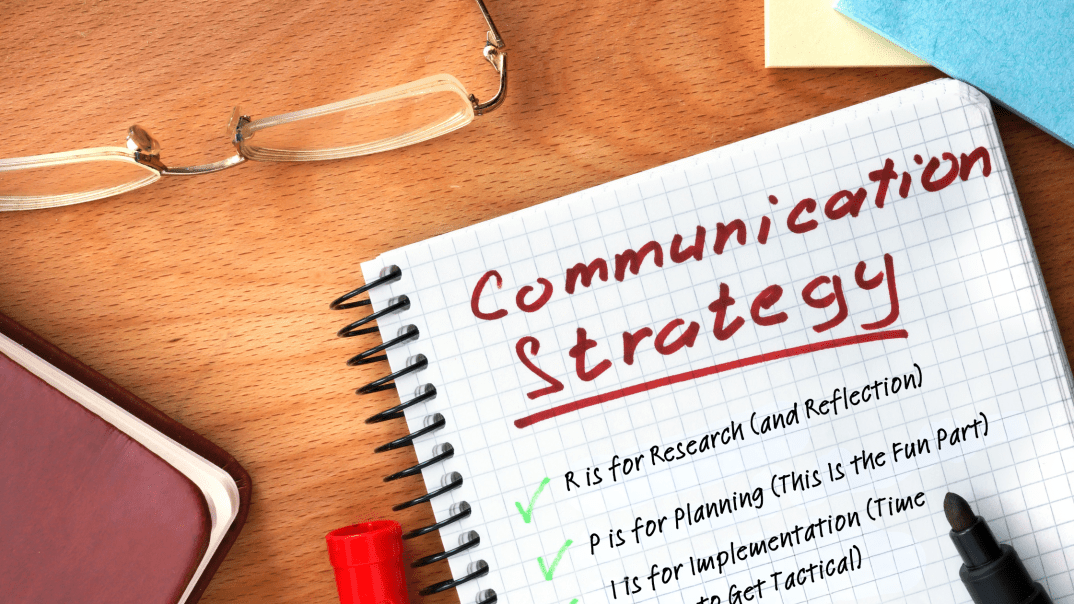
Step 1: R is for Research (and Reflection)
We start by gathering the team for a look-back. What did we accomplish last year? What went well? What didn’t? Did we meet our objectives—or did we even have clear ones to begin with?
We pull engagement data, web traffic, media coverage, and campaign outcomes to see what worked and where we stumbled. Sometimes our biggest lessons come from what didn’t go quite right.
We also talk about trends—both local and industry-wide. Are there changes in public behavior, platform algorithms, legislation, or technology that might affect how we reach people this year?
At the same time, I reach out to department heads. I just ask—what’s coming up this year? Any big initiatives, shifts, or potential communication challenges? These early conversations help us anticipate, instead of react.
👉 Quick win: Don’t have time for a full survey? We’ve done fast sentiment analysis by pulling social media comments on a specific issue and pasting them into ChatGPT for a quick read on public perception. It’s not scientific, but it’s fast, free, and often surprisingly accurate.
Step 2: P is for Planning (This Is the Fun Part)
Once we’ve gathered our intel, we get into the big-picture questions:
- Where do we want to go this year?
- What should we be known for?
- What are we trying to move the needle on?
We usually land on 3–5 big goals. These are high-level and values-based. For example:
“To be set apart as a proactive, transparent city that connects with residents through timely, meaningful communication.”
From there, we set three core priorities for the year. These are more focused—things like increasing public engagement with safety messaging or improving internal communication workflows.
Each priority gets at least one SMART objective—that’s Specific, Measurable, Achievable, Relevant, and Time-bound. A good one sounds like this:
“Increase average engagement rate on traffic safety videos by 25% by the end of Q2.”
This is where the clarity happens. Vague intentions become trackable outcomes.
Here’s a SMART objective formula you can use with a breakdown:
To [desired response type] among [specific audience] by [specific measurable amount or result] by [deadline].
Formula Breakdown:
- To → action-oriented verb tied to the response type (e.g., increase, drive, reduce, improve)
- [desired response type] → awareness, engagement, behavior change, etc.
- [specific audience] → who you’re targeting (e.g., residents ages 25–45, business owners, parents of school-aged children, legislators, residents, etc.)
- [specific measurable amount or result] → % increase, total clicks, form completions, event attendance, etc.
- [deadline] → quarter, specific date, or fiscal year end
Step 3: I is for Implementation (Time to Get Tactical)
Now we build out our campaigns and plans that will help us hit those SMART objectives.
Each plan includes:
- Who the audience is
- What action or change we want from them (awareness, participation, opt-in, etc.)
- Key messages and creative approach
- Channels we’ll use (email, social, video, media, etc.)
- Who’s responsible and when it’s due
Then we operationalize it.
We use Smartsheet to assign tasks, attach deadlines, and map each campaign to the objective it supports. If something’s got lots of moving parts or involves multiple departments, we’ll back that up with Outlook calendar reminders to keep everyone on track.
For example:
- For Pure SoJo, we developed a comprehensive campaign to educate the public about advanced water purification. The goal? Shift perception from fear or skepticism to curiosity and trust.
- For the Bees Ballpark, we realized many residents didn’t know it was actually in South Jordan. We adjusted quickly, built an awareness campaign, and tracked what changed in sentiment and engagement from there.
Step 4: E is for Evaluation (Don’t Skip This!)
Every quarter, we revisit our objectives and see how we’re doing. Did we meet the benchmarks? Are we trending in the right direction? What’s working and what needs to be retooled?
This is where we learn fast and adjust. Sometimes, our research didn’t uncover something important. Sometimes the campaign just didn’t hit. But this step keeps us nimble and focused on outcomes, not just outputs.
We also document everything—so next year’s planning process is informed by real data, not just gut feelings.
Tools We Use
These don’t have to break the bank:
- ChatGPT – for brainstorming, sentiment analysis, summaries, and even drafting first versions
- Smartsheet – project management and campaign tracking
- Outlook – deadlines, reminders, meeting scheduling
- Canva Pro, Adobe Express – creative tools for campaign materials
- Native analytics tools on platforms like Meta, YouTube, Constant Contact, etc.
- Google Forms or Microsoft Forms – quick surveys or feedback forms
Try This Today
If you’re looking to get started (or just reset mid-year), here are some steps you can take right now:
✅ Schedule a planning session—even a one-hour one—with yourself or your team
✅ Write down your top 3 accomplishments and 3 lessons learned from the past year
✅ Reach out to 2–3 internal departments and ask: “What’s coming up that may need communications support?”
✅ Pick one goal and write a SMART objective for it
✅ Identify one piece of low-cost or free research you can do this week
✅ Choose one priority project and start a basic plan (audience, outcome, channels)
✅ Put it all on a calendar and check back quarterly
Strategic communication isn’t about being reactive—it’s about being ready. The RPIE process keeps us grounded and adaptable, and it reminds us that good communication is never accidental.
Here’s to a new year of thoughtful, impactful work. Let’s plan like we mean it.
*ChatGPT was used to assist with this blog.
 Utah PIO Association