How to Become an Advanced Public Information Officer Through FEMA

By Tina Brown, PIO/Joint Information Center Manager | Salt Lake County Emergency Management

Public Information Officers (PIOs) are essential to emergency response and recovery—serving as the bridge between government agencies and the public. While many begin their careers in this field with general communications experience, becoming an AdvancedPIO requires training, real-world application, and a deep understanding of the Joint Information System (JIS) and Joint Information Center (JIC) framework.

FEMA offers a structured path to help PIOs grow from foundational roles into advanced positions capable of leading communications in high-pressure, multi-agency incidents. Here’s how:


Step 1: Meet the Prerequisites

Before enrolling in the Advanced Public Information Officer Course (E/L0388), you must have a minimum of two years of public information experience and complete several prerequisites:

FEMA Independent Study Courses:

  • IS-29.a: Public Information Officer Awareness
  • IS-100.c: Introduction to the Incident Command System
  • IS-200.c: Basic Incident Command System
  • IS42.a: Social Media in Emergency Management
  • IS247.b: Integrated Public Alert and Warning System (IPAWS) for Alert Originators or IS251.a: Integrated Public Alert and Warning System (IPAWS) for Alerting Administrators
  • IS-201: Forms Used for the Development of the Incident Action Plan (waived if ICS-300 is completed)
  • IS-700.b: National Incident Management System (NIMS)
  • IS-800.d: National Response Framework (NRF)

Prerequisites:

  • E/L/K0105: Public Information Basic

These courses are available at training.fema.gov.


Step 2: Enroll in the Advanced PIO Course (E/L0388)

Once you’ve completed the prerequisites, you can apply for the Advanced PIO Course:

  • FEMA’s Emergency Management Institute (EMI) in Emmitsburg, MD (Course Code: E0388)
  • Regional delivery through state or local agencies (rarely offered), (Course Code: L0388)

What You’ll Learn:

  • Crisis and risk communication strategies
  • Building and managing a Joint Information Center (JIC)
  • Social media integration in emergency response
  • Handling high-profile incidents and media scrutiny
  • Developing messaging in rapidly evolving scenarios

The course emphasizes hands-on exercises, simulations, and peer collaboration, preparing you to lead public information efforts during complex disasters.


Step 3: Maintain Skills and Network

Becoming an advanced PIO is not a one-time certification—it’s an ongoing commitment to professional development.

Ways to stay sharp:

  • Participate in real-world incidents and exercises
  • Join PIO working groups or associations (like the National Information Officer Association or local PIO networks)
  • Stay updated on emerging technologies and platforms
  • Mentor new PIOs and share best practices

Bonus: Consider FEMA’s Executive PIO Program

Formerly known as FEMA’s Master Public Information Officer Program, now the Executive Public Information Program, the EPIOP is the final component of the PIO training series. This program consists of three separate course series and a final EPIO Paper.  https://www.napsgfoundation.org/wp-content/uploads/2021/04/MPIOP-Brochure.pdf


Whether you serve in government, public health, emergency management, or law enforcement, becoming an Advanced PIO through FEMA positions you to lead with clarity, calm, and credibility when it matters most.

How I Build a Strategic Communication Plan That Actually Works

Written by: Rachael Van Cleave, South Jordan City Public Information Officer

It’s the beginning of a new fiscal year, and around here, that means one thing—it’s planning season. Time to pause the daily scramble and zoom out a little.

Strategic planning doesn’t have to be overwhelming. In fact, I’ve come to really enjoy the process. It’s our opportunity to reset, realign, and build a roadmap that makes all the daily work feel more intentional. And whether you’re a solo PIO or working with a full team, the process I use can scale.

Here’s a look at how we do it in South Jordan—and how you can use the same approach wherever you are.

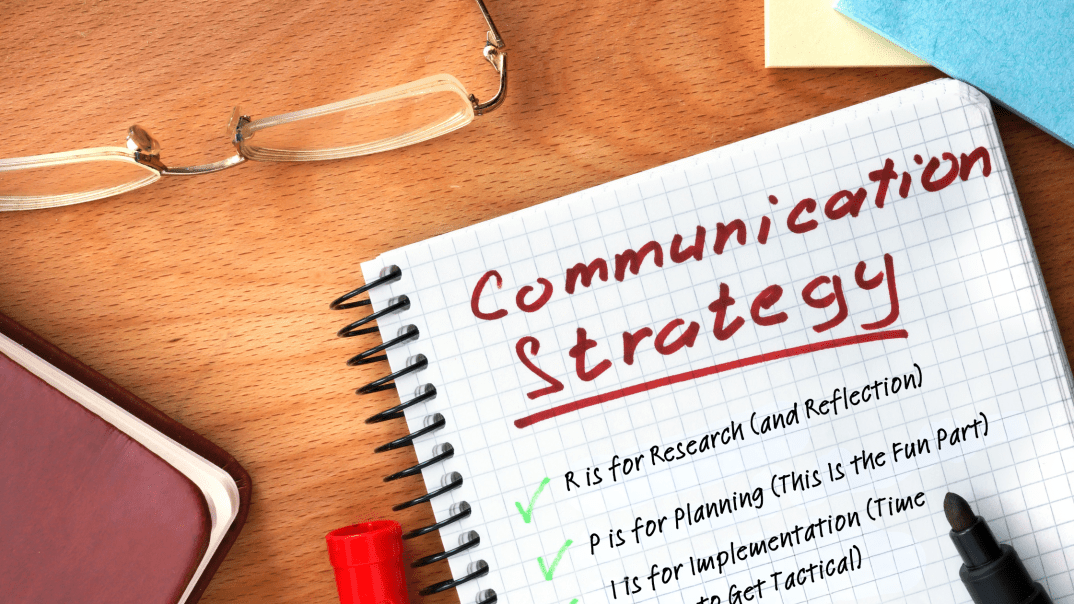
Step 1: R is for Research (and Reflection)

We start by gathering the team for a look-back. What did we accomplish last year? What went well? What didn’t? Did we meet our objectives—or did we even have clear ones to begin with?

We pull engagement data, web traffic, media coverage, and campaign outcomes to see what worked and where we stumbled. Sometimes our biggest lessons come from what didn’t go quite right.

We also talk about trends—both local and industry-wide. Are there changes in public behavior, platform algorithms, legislation, or technology that might affect how we reach people this year?

At the same time, I reach out to department heads. I just ask—what’s coming up this year? Any big initiatives, shifts, or potential communication challenges? These early conversations help us anticipate, instead of react.

👉 Quick win: Don’t have time for a full survey? We’ve done fast sentiment analysis by pulling social media comments on a specific issue and pasting them into ChatGPT for a quick read on public perception. It’s not scientific, but it’s fast, free, and often surprisingly accurate.

Step 2: P is for Planning (This Is the Fun Part)

Once we’ve gathered our intel, we get into the big-picture questions:

  • Where do we want to go this year?
  • What should we be known for?
  • What are we trying to move the needle on?

We usually land on 3–5 big goals. These are high-level and values-based. For example:

“To be set apart as a proactive, transparent city that connects with residents through timely, meaningful communication.”

From there, we set three core priorities for the year. These are more focused—things like increasing public engagement with safety messaging or improving internal communication workflows.

Each priority gets at least one SMART objective—that’s Specific, Measurable, Achievable, Relevant, and Time-bound. A good one sounds like this:

“Increase average engagement rate on traffic safety videos by 25% by the end of Q2.”

This is where the clarity happens. Vague intentions become trackable outcomes.

Here’s a SMART objective formula you can use with a breakdown:

To [desired response type] among [specific audience] by [specific measurable amount or result] by [deadline].

Formula Breakdown:

  • To → action-oriented verb tied to the response type (e.g., increase, drive, reduce, improve)
  • [desired response type] → awareness, engagement, behavior change, etc.
  • [specific audience] → who you’re targeting (e.g., residents ages 25–45, business owners, parents of school-aged children, legislators, residents, etc.)
  • [specific measurable amount or result] → % increase, total clicks, form completions, event attendance, etc.
  • [deadline] → quarter, specific date, or fiscal year end

Step 3: I is for Implementation (Time to Get Tactical)

Now we build out our campaigns and plans that will help us hit those SMART objectives.

Each plan includes:

  • Who the audience is
  • What action or change we want from them (awareness, participation, opt-in, etc.)
  • Key messages and creative approach
  • Channels we’ll use (email, social, video, media, etc.)
  • Who’s responsible and when it’s due

Then we operationalize it.

We use Smartsheet to assign tasks, attach deadlines, and map each campaign to the objective it supports. If something’s got lots of moving parts or involves multiple departments, we’ll back that up with Outlook calendar reminders to keep everyone on track.

For example:

  • For Pure SoJo, we developed a comprehensive campaign to educate the public about advanced water purification. The goal? Shift perception from fear or skepticism to curiosity and trust.
  • For the Bees Ballpark, we realized many residents didn’t know it was actually in South Jordan. We adjusted quickly, built an awareness campaign, and tracked what changed in sentiment and engagement from there.

Step 4: E is for Evaluation (Don’t Skip This!)

Every quarter, we revisit our objectives and see how we’re doing. Did we meet the benchmarks? Are we trending in the right direction? What’s working and what needs to be retooled?

This is where we learn fast and adjust. Sometimes, our research didn’t uncover something important. Sometimes the campaign just didn’t hit. But this step keeps us nimble and focused on outcomes, not just outputs.

We also document everything—so next year’s planning process is informed by real data, not just gut feelings.

Tools We Use

These don’t have to break the bank:

  • ChatGPT – for brainstorming, sentiment analysis, summaries, and even drafting first versions
  • Smartsheet – project management and campaign tracking
  • Outlook – deadlines, reminders, meeting scheduling
  • Canva Pro, Adobe Express – creative tools for campaign materials
  • Native analytics tools on platforms like Meta, YouTube, Constant Contact, etc.
  • Google Forms or Microsoft Forms – quick surveys or feedback forms

Try This Today

If you’re looking to get started (or just reset mid-year), here are some steps you can take right now:

✅ Schedule a planning session—even a one-hour one—with yourself or your team
✅ Write down your top 3 accomplishments and 3 lessons learned from the past year
✅ Reach out to 2–3 internal departments and ask: “What’s coming up that may need communications support?”
✅ Pick one goal and write a SMART objective for it
✅ Identify one piece of low-cost or free research you can do this week
✅ Choose one priority project and start a basic plan (audience, outcome, channels)
✅ Put it all on a calendar and check back quarterly

Strategic communication isn’t about being reactive—it’s about being ready. The RPIE process keeps us grounded and adaptable, and it reminds us that good communication is never accidental.

Here’s to a new year of thoughtful, impactful work. Let’s plan like we mean it.

*ChatGPT was used to assist with this blog.

What I Learned at Advanced PIO

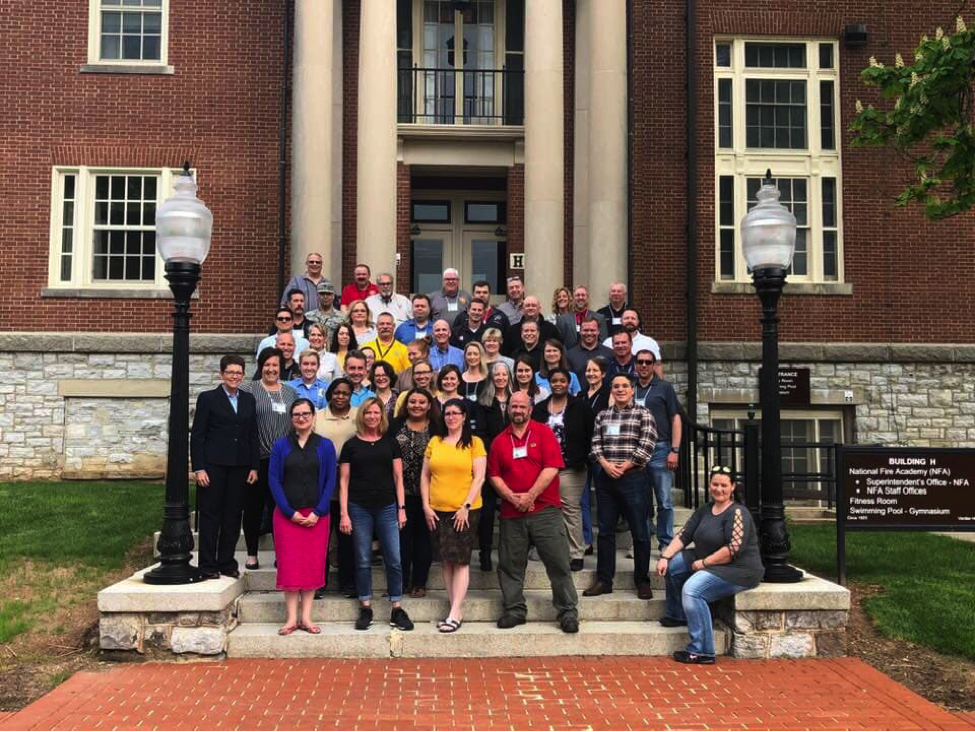
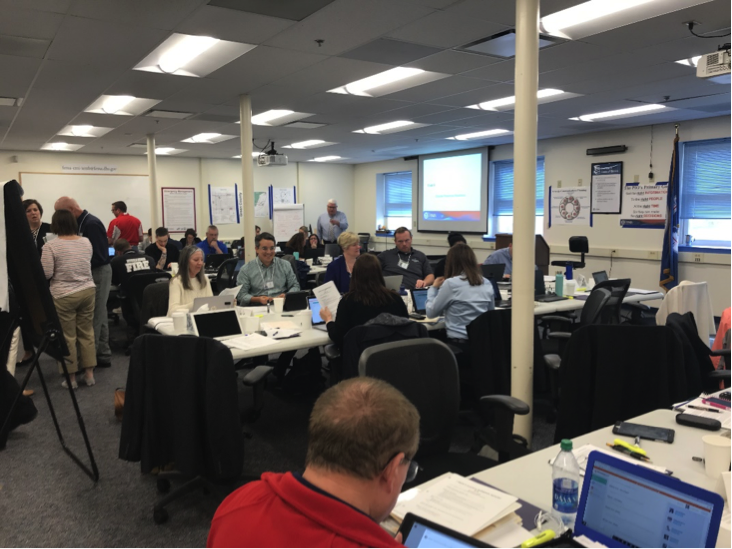
The full Advanced PIO class of April 28-May 4, 2019. Lisa Miller photo
By Lisa Miller
Traveler information manager
UDOT

If you haven’t already attended the FEMA Advanced Public Information Officer (PIO) course… do it. The training, held at the Emergency Management Institute in Emmitsburg, Maryland, is well worth the effort.

This five-day course refreshes the fundamentals that every PIO should have in their toolbox and covers a wealth of advanced information that will improve your perspective and reach as a PIO. Instructions for how to apply are at the end of this post.

Here’s a snapshot of what I learned:

Network

The attendees of this class speak your language. They have had similar situations. There is a wealth of knowledge to transfer just by having lunch and dinner together. This class had nearly 50 participants from all over the nation representing fire, police, National Guard, FEMA and public agencies. We’re all keeping in touch via a Facebook page specifically for our class.

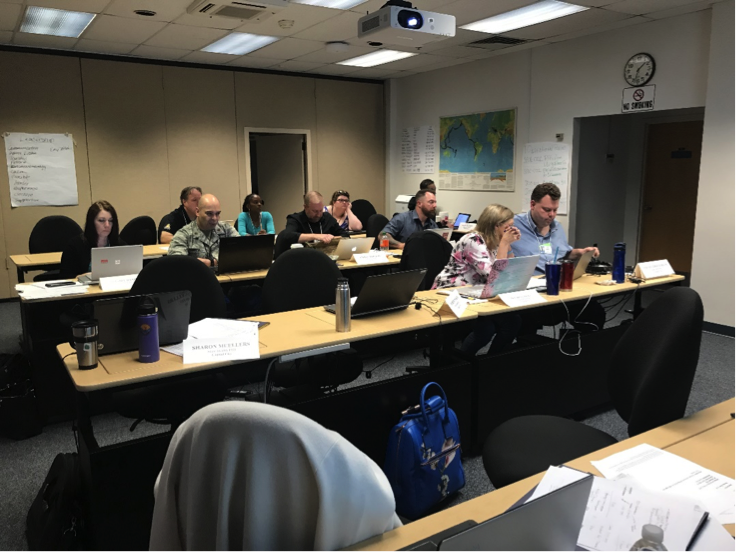
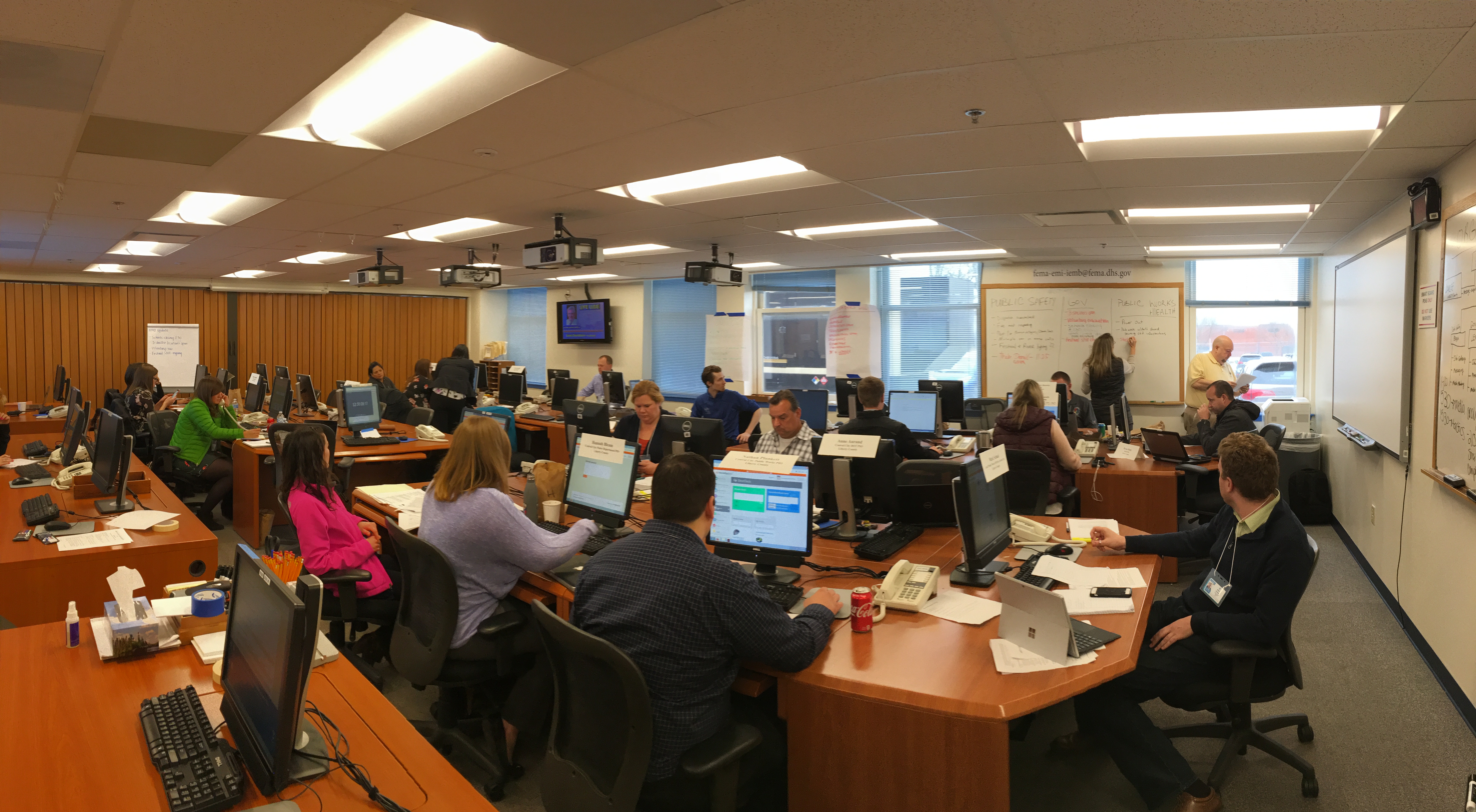
The state JIC during the exercise portion of the class. Lisa Miller photo.

Exercises are critically important

We already know this, but finding time can be difficult. The class schedule blocked 1½ days for a functional exercise focused on Joint Information Center (JIC) coordination. There was a state JIC for the first time in the class as well as local JICs for each fictitious municipality. The injects were phenomenal and encouraged us to build on our institutional knowledge as well as struggle a bit with the things that were less familiar to us.

Leave your ego at the door

For those of you who have been to the training, “don’t be Pam.” Working in a JIC can be a stressful environment without adding inflated egos to the dynamic.

Everyone has the same goal… get the right information to the right people at the right time so they can make the right decisions.

Overall emergency goals of protecting life and preserving property are much better facilitated when everyone checks their ego at the door.

PIOs from around the nation attend the course. It’s a great chance to learn. Lisa Miller photo

There are no bad ideas

During the first day or so of the class, everyone is still in the mode of familiarizing themselves with their classmates. Nobody wants to be the person who brings up an idea that elicits an eye roll! The instructors of the training quickly established the idea that there are no bad ideas. We were all learning and growing together and everyone was encouraged to participate.

Don’t only rely on social media

We are so engrained in social media as a way to reach our constituents. However, in an emergency situation, it’s not the only channel that needs attention. One of the presentations at the Utah PIO Association conference last year stressed this. Wildfires, rural populations, different languages and rapidly changing information can cause confusion and panic among citizens. During times of non-emergency, hone your skills on how to communicate with your audiences through all channels so you’re ready to go when an emergency strikes.

Write for a lower reading level

Every agency is full of acronyms that sometimes do not translate well outside of the agency. Remember that your audience may have language barriers or may read at a lower grade level. According to the Utah Department of Health, nearly 8% of adults in Utah operate at below a high school level. Nationally, this number is around 12%.

PIOs love karaoke

You haven’t truly lived until you’ve heard someone from the St. Louis Division of Water Quality sing Snoop Dogg’s “Gin and Juice” at karaoke night. #nailedit

Have you attended APIO 0388? What were your thoughts and takeaways?

Lisa Miller
APIO Graduate
April 28-May 4, 2019


Editor’s note:

How to apply for Advanced PIO

The course prerequisites list is lengthy and the application process can take quite a while. Classes fill up quickly so plan ahead.

Course description and prerequisites
Download the application form here
When all prerequisites are complete, fill out and sign the application, have your boss sign in the appropriate place and then send your course certificates and application to Kris Repp at krepp@utah.gov. She is the State Training Officer and forwards your application to FEMA.

Conducting your local PIO meetings

The “Liberty County JIC” during the Feb. 2018 APIO Course at EMI.

You’ve suddenly found yourself as the chair of your local PIO group! Congratulations! What a great opportunity to lead the enhancement of public information in your area.

It can seem daunting to have to wrangle PIOs to get them to attend a meeting, but if you provide valuable content, and someone can help with the occasional snacks or lunch, you can have a robust local PIO group. Below are some topic ideas to get you started with the content for your first meetings. Don’t forget to ask local participants what they would like to learn.

Topic ideas:

  • Ask for a status update.
  • Ask about any upcoming issues.
  • Hold a tabletop exercise to discuss emergency response or mutual aid plans for PIOs.
  • Conduct a JIC callout exercise.
  • Conduct a workshop where planning or operational documents are researched or created.
  • Provide training on various topics
    • Social media best practices
    • Social media monitoring
    • Live video considerations
    • Graphic design
    • Photography principles
  • Speaker ideas:
    • Invite media members for a discussion .
    • Lessons learned from a recent incident.
    • Find a State PIO to discuss their role in assisting your efforts during emergencies.
    • Discussion with local elected officials.

What other ideas are out there? What has worked well for you?


Joe Dougherty is the PIO Association Secretary and
PIO for the Utah Division of Emergency Management
jdougherty@utah.gov | Twitter: @PIO_Joe