By Rachael Van Cleave, Communications Manager/PIO | City of South Jordan
I’ve wanted to attend the Advanced PIO course at FEMA’s National Emergency Training Center (NETC) in Emmitsburg, Maryland for years. I first took the Basic PIO course (G290) back in 2019, fully intending to get the Advanced PIO Certification shortly after. Like many plans for 2020, mine got completely derailed by the pandemic. Every in-person FEMA course was canceled, and once things started opening back up, FEMA updated the Basic PIO course—which meant I had to take it again to qualify.
So in fall of 2024, I signed up as soon as the course registration opened, and retook Basic PIO (this time with the designation L105). The reason I say I signed up as soon as it opened is that L105 is offered occasionally in Utah, but often books up quickly. You may need to be willing to take the 3-day, in-person course in a neighboring state. L105 is now part of the Emergency Management Basic Academy, which means you’re competing with a much larger pool of applicants.
As soon as I finished the course, I applied for the next Advanced PIO course that was offered in Emmitsburg, MD, in April of 2025.
What You Need to Know to Apply to Advanced PIO
You must have at least 2 years of PIO experience and complete a list of prerequisite courses.
- IS-29 – Public Information Officer Awareness
- L105 Basic PIO
- They also have a whole bunch of other recommended courses
Also, see Tina Brown’s “How to Become An Advanced Public Information Officer Through FEMA” blog for more about the program and other helpful links.
I got accepted into the April 2025 session in Emmitsburg… but then, just weeks before, it was canceled, along with all other courses on campus, due to federal funding uncertainty. I was offered a spot in a May course virtually, but I held out. Everyone had told me that you have to go to Emmitsburg. It’s not just about the course—it’s the full experience. I was able to quickly transfer to the July course.
Spoiler: It was worth every bit of the wait.
What It’s Like at NETC
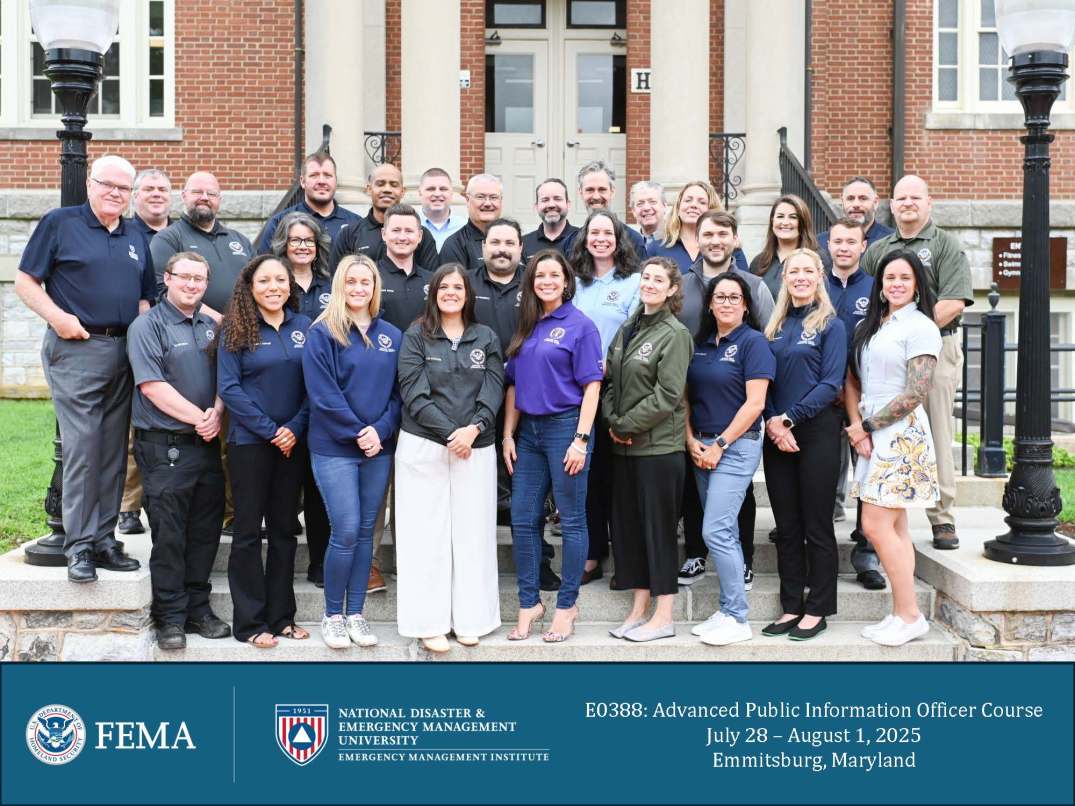
When you arrive in Emmitsburg, it feels a bit like stepping back in time—but in the best way. The campus is beautiful and historic, surrounded by rolling green hills, and dotted with red brick buildings that look straight out of a movie. It’s also humid—with a capital H—so plan accordingly if you’re going in summer because you walk everywhere.
You stay in what’s essentially a government dorm room, complete with 90s furniture and government-style efficiency. I found it charming in a nostalgic, “I can survive anything for a week” kind of way. Meals are served cafeteria-style, three times a day, and the food is WAY better than you’d expect and buffet style, so watch how much you load on your plate!
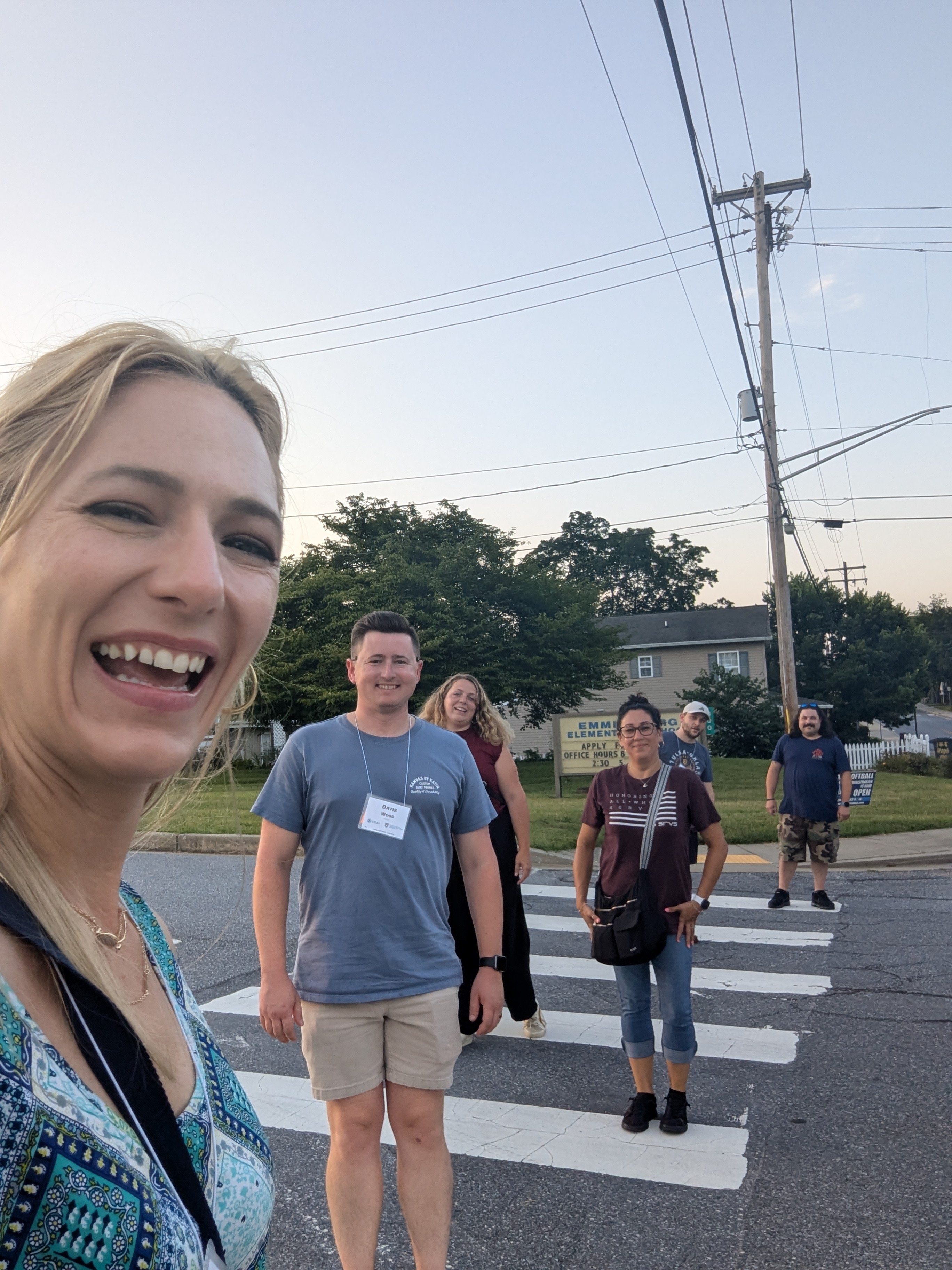
Evenings were one of my favorite parts of the week. Some of us walked into town to check out the Ott House Pub (yes, the legendary one), others hung out at the on-campus pub and rec center (ping pong, pool, bar popcorn…what more do you need?). One evening, a few of us drove to Gettysburg, which I highly recommend. We also walked from campus to the nearby St. Ann Seton Shrine, which is peaceful and absolutely beautiful.

The Course: Intense, Real, and Unforgettable
Before the course even begins, you’ll get homework—about a week out. You’ll need to block out at least six hours to get it done. It’s not busywork either—it sets the stage for what’s to come.
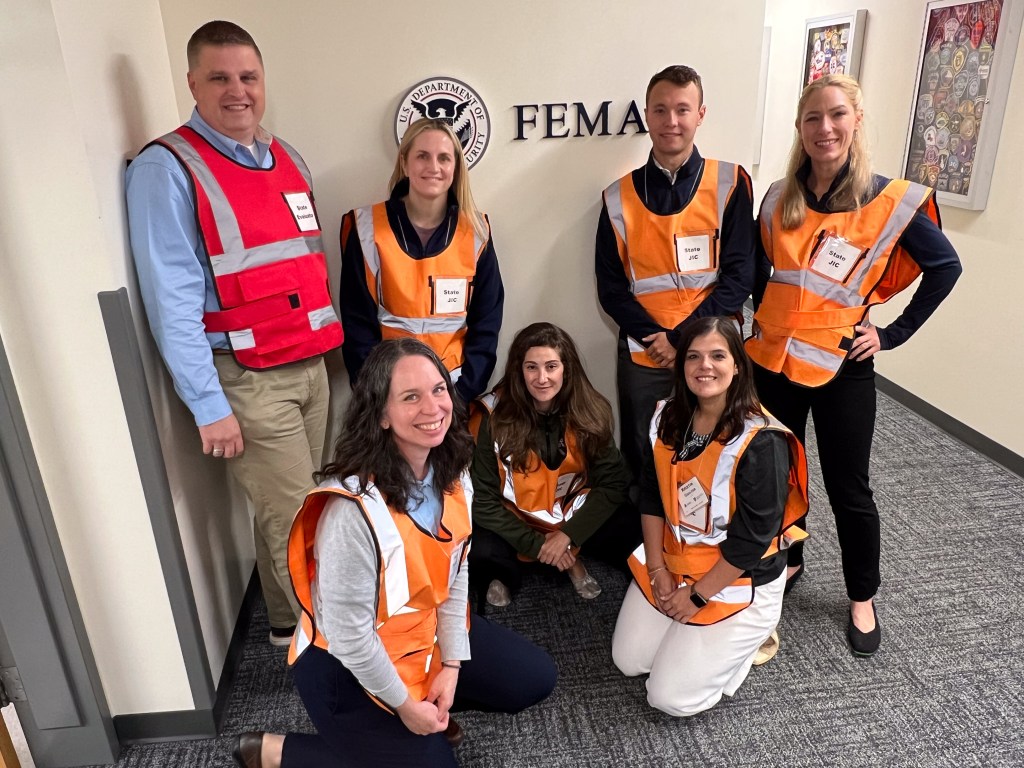
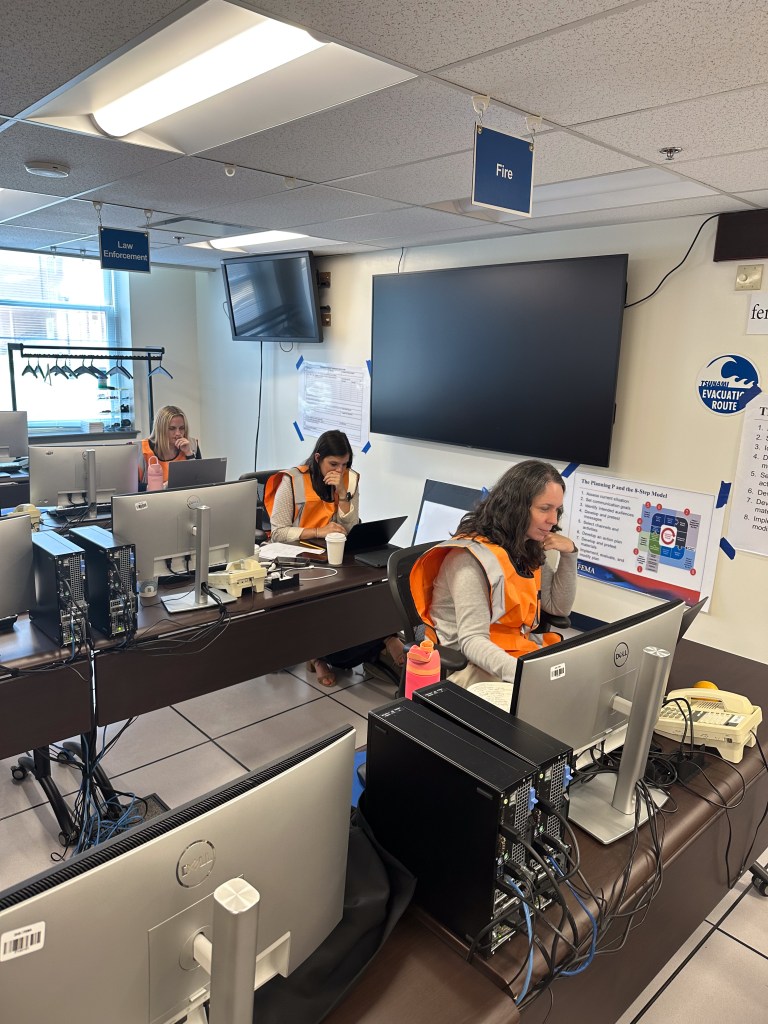
The course itself is intense. It’s designed to simulate real-world disasters, complete with press conferences, joint information centers, and situations that unfold minute by minute. You’ll write, speak, plan, and respond under pressure, and you’ll do it all alongside other PIOs from across the country.
It’s not easy, but it’s incredibly rewarding. The instructors are some of the best I’ve worked with, and the feedback you receive is direct, insightful, and meant to push you further. I walked away with stronger skills, more confidence, and a new group of PIO friends I’ll stay connected with for years to come.
Tips & Tricks for Future Attendees
If you’re thinking about applying, here are a few things I wish I’d known sooner:
Timing & Process
- First, you apply online for L0388: Advanced Public Information Officer.
- Applications are processed in batches, so if you apply early (like I did), you may not hear back for months.
- After I applied, I got an email confirming that I provided all of the required information, then I received an email saying the “head of your sponsoring organization has endorsed your application,” which is generally a contact in the state.
- I got my acceptance email about 2 months before your course starts, which included:
- A welcome packet with dress code, behavior expectations, and campus info.
- A link to reserve your free airport shuttle from BWI (do this 7+ days in advance).
- A link to buy meal tickets (do this 14+ days in advance, ~$270).
Travel & Logistics
- Everyone in my cohort flew into BWI (Baltimore/Washington International), which was the only option for those wanting to use the free shuttle.
- FEMA books your room automatically.
- When you get to NETC they give you the form you need to fill out to get the reimbursement for your flight. Please note that FEMA reimburses you as an individual, not your employer. If your employer paid for your flight, you’ll have to figure out how to get that money back to them.
While You’re There
- Do your homework before you arrive so you can enjoy the campus when you get there and not lock yourself in your room to get it done before the lecture part of the course begins on Monday.
- Pack business casual clothes, a light jacket for over-air-conditioned buildings, and shoes you can walk in.
- Make time to socialize and explore, your classmates will be some of the best people you’ll meet in this field.
- Bring cash to get your membership card ($2) and for the pub. The card lets you buy drinks at the on-campus Command Post pub and also gives you access to the recreation center, basketball gym and pool. You also need cash for drinks. They do have an ATM at the pub.
Other Tips
- Please note that before you are able to do any of the courses, you must sign up for a FEMA Student ID (SID) number, which you can do online.
- You can sign up to receive emails for NDEMU’s course and training information.
Acronym Overload? Here’s a Cheat Sheet:
- PIO – Public Information Officer
- L105 – Basic PIO Course
- IS – Independent Study (FEMA’s free online courses)
- NETC – National Emergency Training Center (Emmitsburg, MD campus)
- EMI – Emergency Management Institute (now called NDEMU)
- NFA – National Fire Academy (also at NETC)
- NDEMU – National Disaster and Emergency Management University (new name for EMI)
Final Thoughts
If you’re on the fence about applying, just do it. And if you can, hold out for the Emmitsburg experience. This course is more than just another bullet point on your resume. It’s a test of everything you’ve learned, a chance to build your skills in a real-world setting, and a week where you’ll walk away feeling re-energized about the role we play as communicators in emergencies.
I’m incredibly grateful I had the chance to go, and I won’t soon forget the people I met, the lessons I learned, or the history-steeped campus I got to call home for a week.
Got questions about applying or what it’s really like? Reach out, I’m happy to share what I can.
 Utah PIO Association