When Wildlife Goes Wild: Lessons Learned and Crisis Communications Tips

The Utah Division of Wildlife Resources experienced a series of chaotic, “dumpster-fire”-esque events during a six-month period between the fall of 2022 and spring of 2023. Much of the mayhem involved record-breaking snowfall, which was great for combatting ongoing drought conditions, but also wreaked havoc on wildlife in several parts of the state. 

Because wildlife can be unpredictable, various crises involving them and their management occur from time to time. When such situations arise, it falls to the communications teams of wildlife agencies to help relay essential information to the public and to internal staff.

Here’s a look at those crises that the Utah Division of Wildlife Resources dealt with and lessons learned by their public information officer, Faith Heaton Jolley.

Millcreek Canyon cougar incident

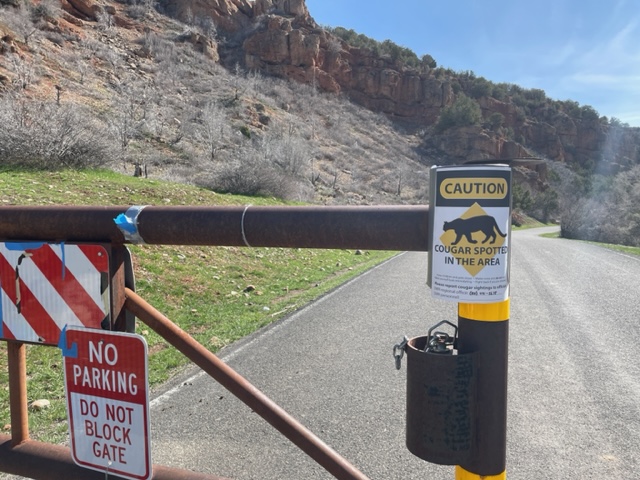
The first situation involved a woman who was leapt on and scratched by a cougar while trail running in Millcreek Canyon near Salt Lake City in September 2022. Thankfully, she wasn’t seriously injured and was able to make it down the trail and to a local hospital. DWR biologists and conservation officers responded to the scene and were able to locate the cougar involved. Because it had injured a person, the cougar was euthanized, per DWR protocols. 

Because the woman had called emergency dispatchers, a local media outlet (listening to police scanners) was alerted to the incident. After providing information and doing a virtual interview, the PIO (me) felt confident that the TV station was satisfied and had what they needed. However, the reporter then showed up on the scene unannounced to get additional footage of the area. The search for the cougar was still underway, and the reporter was there and heard the gunshot of the cougar being euthanized.

Lesson learned: Be prepared for reporters to just show up on scene, even after providing them with information. Have a prepped outreach/communications employee there, even if you aren’t planning to hold a formal press conference. This will allow your employee to intercept reporters and visit with them in a predetermined staging area. This will also help keep media personnel out of areas where an investigation — or other follow-up activities — are still occurring, so they don’t impede ongoing work or see or hear something you don’t want them to. 

Diamond Fork cougar incident

In April 2023, there was another very similar incident. A man was hiking in Diamond Fork Canyon, about 70 miles south of Salt Lake City, when he encountered a mountain lion and was also severely scratched. He was able to hike back down the canyon and drove himself to the hospital. The local county sheriff’s office received a report of the incident and shared it through social media late that same night, which of course, alerted reporters to it. Because so many media outlets wanted information, the decision was made to hold a press conference the next morning.

I told our conservation officers to ask the victim if he was comfortable doing media interviews at some point in the future, in case the media asked — thinking that media could just be referred to the man if they were interested. However, moments later, an officer informed me that the man who’d been attacked was on his way to the press conference — a definite curveball to controlling the narrative at the media event. Thankfully, the victim’s account of the incident was straightforward, and the press conference went smoothly.

Lessons learned: Make sure you are coordinating with other partnering agencies so you can help control the timing and messaging of any public information that is released. And make sure you communicate very clearly about the plans for any public outreach so that everyone is on the same page (and you don’t have the victim inadvertently show up to the press conference!) 

Winter mayhem

More than 900 inches of snowfall in parts of Utah during the 2022-23 winter caused multiple issues for the state’s wildlife. Here are a few of the incidents and decisions that had to be communicated to the public:

  • Elk take over Salt Lake City: In search of food, a herd of roughly 200 elk migrated onto a golf course next to a major freeway on the east side of Salt Lake City. They caused countless traffic concerns on nearby roadways, and despite numerous attempts to herd them out of the area, they kept returning and stayed there for roughly 2 months.
  • More elk chaos: A separate herd of elk migrated near the freeway about 15 miles from the first location, and 15 elk were hit by vehicles during one weekend. The DWR had to partner with the Utah Department of Transportation to lower speed limits in the area and post warnings on electronic road signs.
  • Emergency deer feeding: In an effort to help deer herds that were struggling in deeper-than-normal snow, the DWR implemented emergency deer feeding in some parts of northern Utah. This also required nuanced messaging to explain why the public should not feed deer or other wildlife on their own. 
  • Emergency shed hunting closure: The DWR announced a statewide emergency closure to shed antler hunting during these months, also in an effort to help wintering big game, particularly deer populations. 
  • Closures to wildlife management areas: While several wildlife management areas in Utah have annual seasonal closures to help protect wintering big game, those closures were extended this year due to the weakened condition of deer in northern and central Utah. 

The concurrent, multi-month crises obviously provided some challenges and increased workload for both myself and my communications team. But there were also some valuable takeaways and lessons learned. 

Here are a few: 

  • Keep providing updates to the media, even if there isn’t much of an update to share. They are anxious for more information each day. Always be responsive and just tell them that there isn’t any new information, if there aren’t any updates that day.
  • Have an emergency response plan (particularly for wildlife attacks or other major crises that occur from time to time) and train staff to know what to do and what their role is. This should all be done in advance and routinely brushed up on so that everyone feels confident in what to do when the actual crisis hits.
  • As much as possible, prep evergreen statements, draft messaging, etc., and get it approved in advance. This will help speed up your emergency communication efforts. If you have preapproved statements or information,  you can reuse it — or easily modify it — in applicable situations.
  • Don’t forget about your internal communication! So often as communications professionals, we are focused on our external audience and the general public, but we need to loop in our internal staff as well. This was an oversight when we closed shed antler hunting, and then our front desk staff began getting calls and had no idea what was going on or what to tell people.
  • Train your coworkers to loop you in when crises arise, particularly ones that may hit the media or that the public could learn about. This will help you to prep messaging and talking points in advance so you are ready when reporters do reach out.
  • Use all your channels to get your messaging out. This will help magnify your message and help you reach more people who may get their information in different ways.
  • Don’t be a hero — ask for help! When everything is on fire and chaos is raining down, don’t try to do everything yourself. Lean on your team members to help prep messaging, put together communications materials and handle media interviews. 

Numbers Don’t Lie: How I Learned to Let Data Drive My Messaging

By Marie Magers, Communications Manager/PIO | City of West Jordan

I have never considered myself a “data person.” Full honesty: math has never been my thing. But digging into analytics has completely changed how I approach messaging and how city leaders trust the work we do.

The good news? You don’t have to be a genius to understand data. Modern programs make the numbers easy to translate. Once you start paying attention, you realize analytics are less about math and more about people. They show you what residents care about, what confuses them, and what you can get ahead of before they even reach out.

Social Media and City Newsletter: Follow the Engagement:

Every month, I look at what’s working on our social channels and our newsletter (we send two a month). The posts that get clicks, shares, and reactions? That’s what residents really care about. The posts that don’t? They tell us how to tweak the messaging next time.

If you’re already looking at engagement metrics, here’s the next step: compare them with your newsletter clicks, website traffic, and even call trends. Patters start to emerge, and suddenly you’re not just seeing what resident like, you’re seeing what they need from you.

Web Views & Calls: Real-Time Resident Signals:

Our website and call data are just as important. A spike in page views, or questions popping up in our WJ Info Hub (our Teams chat where call takers across the city share what they’re hearing or questions they are getting) – usually means it’s time to push messaging sooner, more clearly, or maybe in a different format.

Case in point: seasonal cans (our city’s former green waste program). If Info Hub starts getting questions earlier than usual, we know it’s time to start messaging sooner. That’s not guesswork – it’s evidence.

Why This Works for Any Team:

Small Team: analytics give you focus and confidence. You know what to prioritize and can back it up. Large Team: analytics help everyone row in the same direction and keep messaging consistent.

Here’s the part that can get overlooked: it’s the connection between the data sources that really has an impact. Together, social engagement, newsletter clicks, website hits, and calls paint a clearer picture than any single metric alone.

Final Thought:

Using analytics isn’t about numbers, it’s about building trust. It helps us communicate smarter, act proactively, and show our leaders (and residents) that we have the proof to back up our decisions.

The numbers don’t lie. And when we follow them, across channels and across teams, our messaging does exactly what it’s supposed to do.

The Trust Factor: Building Confidence in a Society of Misinformation

By Jeanteil Livingston, Communications Manager | Lehi City | PIO Association Vice President

Trust has always been the cornerstone of effective communication, but in today’s world, it’s harder to earn and easier to lose.
In an age where misinformation spreads in seconds, communication professionals face the challenge of being both accurate and fast, empathetic yet firm, transparent yet strategic. Whether you manage media relations, oversee social media, or coordinate emergency updates, your ability to build trust directly shapes how the public perceives your organization.

The Challenge of Misinformation

Misinformation and disinformation are everywhere, shared, reposted, and repeated until they feel true. As communication professionals, we see firsthand how quickly speculation can outpace verified facts, especially during a crisis. When information is scarce or unclear, people fill the gaps with whatever they can find.

That’s why it’s critical for public communicators to be more than messengers. We must be interpreters of truth, offering clarity, consistency, and context in moments of uncertainty.

The Pillars of Public Trust

Transparency

Transparency is the first step toward building credibility. The public doesn’t expect us to know everything right away, but they do expect honesty and openness. Sharing what you know, what you don’t, and what steps are being taken to find answers signals integrity.

Tips:

  • Acknowledge uncertainty when details are still developing.
  • Provide regular updates, even when there’s little news to share.
  • Be upfront about challenges or delays, honesty outlasts perfection.

Transparency shows accountability and builds long term confidence.

Consistency

Consistency of message, tone, and timing is one of the strongest predictors of trust. People are reassured when they know what to expect from your organization and when to expect it.

Tips:

  • Coordinate across departments to ensure everyone is saying the same thing.
  • Use familiar formats and posting times for updates.
  • Stay steady in tone, avoid reactive or defensive messaging.

Consistent communication builds reliability and stability.

Credibility

Speed matters, but accuracy matters more. In an environment where anyone can publish information, credibility is the defining advantage of professional communicators.

Tips:

  • Confirm facts before releasing statements.
  • Correct misinformation quickly and publicly when errors occur.
  • Use trusted experts and data to back up key messages.

Credibility is earned through precision, not popularity.

Connection

People trust people, not institutions. Building authentic relationships with your community, media partners, and stakeholders ensures your messages carry weight when it matters most.

Tips:

  • Be visible and approachable in non-crisis times.
  • Use plain, human language instead of bureaucratic phrasing.
  • Engage in two-way communication, listen as much as you speak.

Connection turns communication into collaboration.

Empathy

Empathy transforms official statements into meaningful communication. When audiences feel seen and understood, they’re more likely to trust your message, even when the news is difficult.

Tips:

  • Lead with compassion before facts (“We understand this is frustrating…”).
  • Use inclusive, reassuring language.
  • Acknowledge the community’s emotions, not just the logistics of the situation.

Facts build knowledge, but empathy builds trust.

Responding to Misinformation

When misinformation spreads, how we respond can either restore credibility or deepen confusion. A defensive tone can alienate audiences, while calm, factual communication invites understanding.

Tips:

  • Correct misinformation clearly, calmly, and publicly.
  • Provide context, help people understand how and why false information spread.
  • Use visuals, infographics, or video explainers to simplify complex truths.
  • Partner with community influencers or local leaders who can amplify accurate messages.

Misinformation thrives on emotion; truth thrives on calm, consistent facts.

Building Trust Before the Crisis

Trust doesn’t start when the headlines hit, it’s cultivated in everyday communication. Regular, transparent interactions with your community establish a baseline of confidence that carries over when urgent situations arise.

Tips:

  • Share behind-the-scenes looks at projects and decision-making.
  • Celebrate small wins and community successes publicly.
  • Be proactive in outreach so people know where to turn for accurate updates.

Trust earned in calm times becomes resilience in a crisis.

Your Personal Trust Factor

Every communicator carries personal credibility that shapes how their organization is perceived. Professionalism, empathy, and dependability go a long way toward building lasting trust.

Tips:

  • Be responsive to questions, even the difficult ones.
  • Continue learning about communication trends, media literacy, and crisis response.
  • Treat every interaction as a reflection of your organization’s values.

You are the voice of trust long before a press release is written.

Trust Is Built One Message at a Time

Trust isn’t automatic. It’s built through steady, transparent, and human-centered communication, one update, one conversation, and one interaction at a time.
In a society overwhelmed by misinformation, communication professionals have a unique power: to offer clarity in confusion, honesty in uncertainty, and hope in the face of fear.

Trust is not earned by being perfect, it’s earned by being real, reliable, and present when it matters most.

Alone at the Wheel: AI Ethics for the One-Person PIO Team

By Brock Damjanovich, Communications Manager | Salt Lake County Office of Regional Development

Are we sick of talking about AI yet? Will the AI bubble pop soon? What does the future look like?

These are all questions I simply cannot answer, but it’s our responsibility to ask the hard questions as we attempt to integrate new technology into our workflows, especially if you’re like me and a team of one! I’m not sure if you’ve read the headlines, but I don’t foresee the number of team members on my own team growing any time soon.

So with that framing aside, let’s dive into what ethical integration looks like for government teams of all sizes, but especially small teams like mine. 

Coming to Terms with Falling Behind the AI Curve

Three years ago, it would have made perfect sense for governments of all sizes to draft AI policies and standards before the train picked up speed. But time was tight, resources were thin, and then ChatGPT exploded at the end of 2022. Within two months, it hit 100 million users and became the fastest-growing consumer app in history.

Some agencies now have guardrails. Many don’t. If you’re a PIO or emergency communicator (especially a team of one), this matters. I’ve used AI to draft press releases, summarize public meetings, and sketch crisis messaging. It helps stretch limited capacity, and it raises real questions:

  • What happens when public messaging is shaped by new tools that the public doesn’t understand?
  • What are our obligations around disclosure, accuracy, and accountability?

These aren’t hypotheticals. They’re shaping how the public sees our work right now.

The Five Ethical Pillars for PIOs

I’ve learned that when discussing AI Ethics, it’s important to address use cases alongside ethics. It helps people understand not only the potential of AI but also how they can incorporate good practices in their workflow from the start.

Think of these pillars as the guardrails that let you move fast without breaking trust. Each pillar includes practical examples so you can plug the ideas into your day-to-day work.

1. Human Oversight – Keep Humans on the Hook

Large language models can produce strong drafts. They cannot exercise judgment. They do not know your community, your elected officials, or your risk tolerance. Treat AI like an intern who works fast and needs editing.

Oh, and AI can lie, and does so with all the confidence in the world.

  • Consider the “two humans” rule. One person prompts and edits. A second person signs off for anything public (this should be your subject matter expert), especially during incidents.
    • If you truly are a team of one, use a written checklist as your second set of eyes.
  • Define what AI can and cannot touch. Brainstorms and first drafts are okay. Final alerts, legal or HR replies, and sensitive stakeholder messages might require human authorship.
  • Require source checks. If AI suggests statistics or quotes, verify them yourself. Paste links into a browser. Call the source if needed.

Example:

You ask AI to draft a shelter-in-place SMS. It writes a polished message that uses jargon. You replace jargon with plain language, confirm the address format, insert the correct time window, and run it through your checklist. Only then do you post to your alerting system.

2. Transparency – One Public Policy Beats 100 Tiny Footnotes.

The public does not need a “written with AI” label on every email and social post. They do need a clear policy that explains how your agency uses AI and how people can raise concerns.

At Salt Lake County, I’ve treated our AI Policy like our Privacy Policy. Available within just a couple of clicks, it is linked right in our social bio!  

  • If you have an AI Policy or an AI Use Declaration, put it online in an easily accessible place. State the types of AI you use, the functions they support, and that all public communications are reviewed by people. Include what you will never do, such as feeding private information into public chatbots.
  • Disclose when AI involvement is material to public understanding. A general newsletter does not need a tag. A report that uses AI to analyze thousands of comments should say so and explain the human review process.
  • Be explainable. Staff who use AI to cluster comments, triage inquiries, or generate drafts should be able to describe how and why the tool influenced the result.

Example:

You publish a public comment summary on a controversial proposal. The header notes that AI assisted with clustering themes and that staff verified each theme against the full record. You link to the methodology and provide a contact for corrections.

3. Bias – Inclusion Isn’t Automatic.

What is a large language model? It predicts the next likely word based on patterns in huge datasets. It does not understand the meaning. If the datasets lean toward one group or one style, outputs will reflect that lean.

In addition, some companies or individuals might be trying to use outside influence to intentionally bias AI outputs. Be aware of AI chatbots or software that is intentionally biased, as well as AI that is accidentally biased. Some examples of AI bias include:

In practice

  • Edit for inclusion. Replace formal phrasing with plain language. Choose examples that match your local community.
  • Human review for non-English content. Do not rely on AI alone for translations or dialect nuances.
    • However, it’s a whole lot better than a tool like Google Translate, because if you are able to have an AI translation revised by a human, then you can feed that back into the AI for improved future translations that learn from your agency’s language preferences.
  • Maintain a style sheet. Include reading-level targets, preferred terms, and phrases to avoid.

Example
You generate a first draft of a heat advisory post in English and Spanish. The Spanish draft sounds stiff and uses idioms that do not fit your audience. You ask a bilingual staffer or trusted partner to correct tone and vocabulary before posting. Then feed it back into the AI to improve future outputs!

4. Data Privacy – If You Wouldn’t Publish It, Don’t Paste It.

AI is only as safe as what you feed it. Once you put information into a tool, you may not control where it goes. This is why data privacy sits at the center of ethical AI for PIOs.

What counts as PII
Personally identifiable information (PII) is any data that can identify a person. That includes names, home or email addresses, phone numbers, photos, account numbers, license plates, IP addresses, birth month plus ZIP code, and combinations of details that reveal identity. 

  • Do not paste PII into public chatbots. This includes raw emails from constituents, 311 tickets, hotline logs, screenshots of social media messages, and staff rosters.
  • Redact or synthesize. Replace real names and details with neutral placeholders before prompting.
  • Give preference to approved enterprise or government instances. Use tools with clear data retention policies and opt out of allowing models to train on your content when possible.
  • Check outputs before sharing. Make sure summaries do not pull identifiable details back into the text.

Example
You need a quick summary of 50 emails about a road closure. You remove names, addresses, and unique references, then paste only the redacted text. The output lists top concerns without identifying anyone. If you choose to replace names with aliases, you could reintegrate the data with the original PII after the output (outside of the AI tool, of course).

5. Environmental Sustainability – Using AI Thoughtfully

AI lives in data centers that use electricity and water for cooling. As usage grows, so do emissions and resource use. Credibility matters when you ask the public to conserve or to adopt resilience measures.

  • Choose the lightest tool that does the job. Use short prompts instead of many regenerations. Use batch tasks instead of constant retries.
  • Include sustainability in procurement. Ask vendors about energy and water practices and  for public reporting.
  • Avoid vanity use. If a human can write a two-sentence update faster than you can prompt, skip AI.

Example
For a simple calendar post, you write it yourself. For a major after-action report with hundreds of inputs, you use AI to cluster themes in one batch run, then conduct a human review.

Or as I always say – if you happen to be dating an AI chatbot (I certainly am not judging), then maybe give them the weekend off. 

A Simple AI Usage Checklist

  • Is a person in charge of the final words?
  • Did someone verify facts and links?
  • Did we avoid PII or redact it first?
  • Does the message meet plain-language and inclusion guidelines?
  • If AI materially shaped the outcome, is that explained somewhere that the public can find?
  • Do we have a record of prompt, draft, edits, and approval?

Tools do not build trust. People do.

AI can help a one-person PIO move faster, but trust still moves at the speed of people. 

If we keep humans in the loop, publish clear rules for how we use AI, check our drafts for bias, protect privacy as if it were evidence, and mind the footprint of the tools we choose, we’ll earn the right to use them when it counts. 

The public won’t judge our prompts; they’ll judge our judgment. Let’s show them that speed and integrity can live in the same message.

Last but not least, if you’re just getting started with AI, learn from the people who’ve already done the hard work. The GovAI Coalition, run by the City of San Jose, curates practical playbooks, model policies, procurement checklists, and much more for public agencies. 

What Government Communicators Need to Know About HB 551

By Laura Magness, Communications Director | Midvale City

As government communicators, we know how often our work intersects with elected officials, whether we are drafting a newsletter, designing a flyer, or posting updates on social media. A new Utah law, HB 551 – Elected Official Publicity Amendments, signed by Governor Cox this spring, changes how we handle certain communications. It took effect May 7, 2025.

What HB 551 Means

HB 551 limits the use of public funds for publicity featuring elected officials during the 60 days before a caucus, convention, or election.

Specifically, the law restricts:

  • Printed mass communications, defined as mailed materials that:
    • Contain identical or substantially similar content
    • Are mailed to more than 500 recipients in a calendar year
  • These materials cannot:
    • Highlight an elected official’s name in the largest font
    • Include their photo, image, or likeness

This ensures taxpayer dollars are not used for campaign-style promotions.

What is Still Allowed

HB 551 allows:

  • Direct responses to constituent questions
  • Communications between public officials
  • Press releases issued to media outlets
  • Mailings required by law

The day-to-day business of government communication continues, just with extra attention during election season.

Printed vs. Digital Communications and Interpretation

The law explicitly applies to printed mass communications, as defined above. Digital communications, such as emails, social media posts, and website content, are not specifically regulated under the statutory definition of “mass communication.”

That said, many agencies treat digital communications featuring elected officials thoughtfully. Public-funded digital content could still be perceived as publicity or promotion. To reduce risk, it is recommended to review digital communications with your agency’s legal counsel when they feature elected officials during the 60-day window.

In short:

  • Printed mass communications must strictly follow the law
  • Digital communications are not explicitly restricted, but caution and legal review are advised

Why This Matters for PIOs

Small design choices, such as font size, photo placement, or timing, can make the difference between compliant and non-compliant communications. Even something as simple as a headshot on a flyer or newsletter may require review.

Legal Interpretation

Every agency may interpret the law differently, and not every situation is clear-cut. Consult your attorney before moving forward on projects that could be affected.


Quick Reference for HB 551

What You Cannot Do (within 60 days of a caucus, convention, or election)

  • Use public funds for printed mass communications that:
    • Show an elected official’s name in the largest font
    • Include their photo, image, or likeness

What is Still Allowed

  • Responding directly to a constituent inquiry
  • Communicating with another public official
  • Issuing press releases to media outlets
  • Mailings required by law

Tips for PIOs

  • Double-check fonts, images, and layouts on printed materials
  • Be mindful of timing, especially during the 60-day window
  • Flag projects featuring elected officials for legal review
  • For digital communications, consult legal counsel if unsure

Timing Notes

Many of you already navigated HB 551 during the primary elections. For those using Ranked Choice Voting, compliance begins 60 days before the General Election, since no primary was held. That said, we all must follow HB 551 for the General Election.

The 60-day window began on September 4, 2025. From this date forward, any printed mass communication featuring an elected official’s name – or their photo, image, or likeness must be reviewed carefully. Digital communications should also be reviewed when public funds are used, even though the law does not specifically regulate them.